
Tracking Niagara's Changing Shorelines with VAST
With Summer in full swing, there is no better time to be out by the beach and cooling off on these hot summer days. White you stroll along the shore, why not consider a quick and easy way to interact with, and learn about the waters near you?
One of the best and easiest ways to steward your local shoreline is with the Visual Assessment Survey Tool (VAST).VAST is a free, mobile monitoring tool that allows you to track the changes in your shoreline over time and contribute data that can help inform beach management. Simply put, VAST provides the tools and training for community members to monitor and learn about coastal stressors, including erosion, pollution, algae washup and more, through a variety of survey modules. All of the information needed to complete the survey is found directly in these modules, making them easy and quick to complete. The results of these surveys help communities to not only document and learn more about threats to their shorelines, but also inform management decisions to address these concerns and keep water swimmable, drinkable and fishable for future generations.
VAST has had tangible impacts in the Great Lakes. For example, in 2025 we led the Niagara Algae Monitoring Pilot where VAST was employed weekly at 5 beaches across the Niagara Region to monitor nuisance algae washup.
Although not directly toxic like the infamous blue-green algae, cladophora comes with it’s detriments. When rotting in the water, they contribute to a process known as eutrophication, where bacteria consumes the oxygen in the water to break down to algae and leaves little left for the fish and other aquatic organisms.
Nuisance algae like Cladophora love to grow in warm, nutrient rich waters, attaching to hard surfaces like concrete, rocks and logs. Though they are non-toxic, factors such as warming water, increased nutrients from runoff and invasive mussels encourage an overgrowth of this algae which is not only unsightly and smelly, but can also be harmful. Rotting algae blooms can harbour harmful bacteria such as E.coli and Botulism which may impact birds as they search for food in the algae mats. Once dislodged by waves or through decay, it washes up near our shores forming dense rotting mats both in the water and along the beach that discourage beach use.
Niagara is one of the only regions where beaches are closed expressly due to algae washup, rather than bacterial contamination or other health and safety risks.
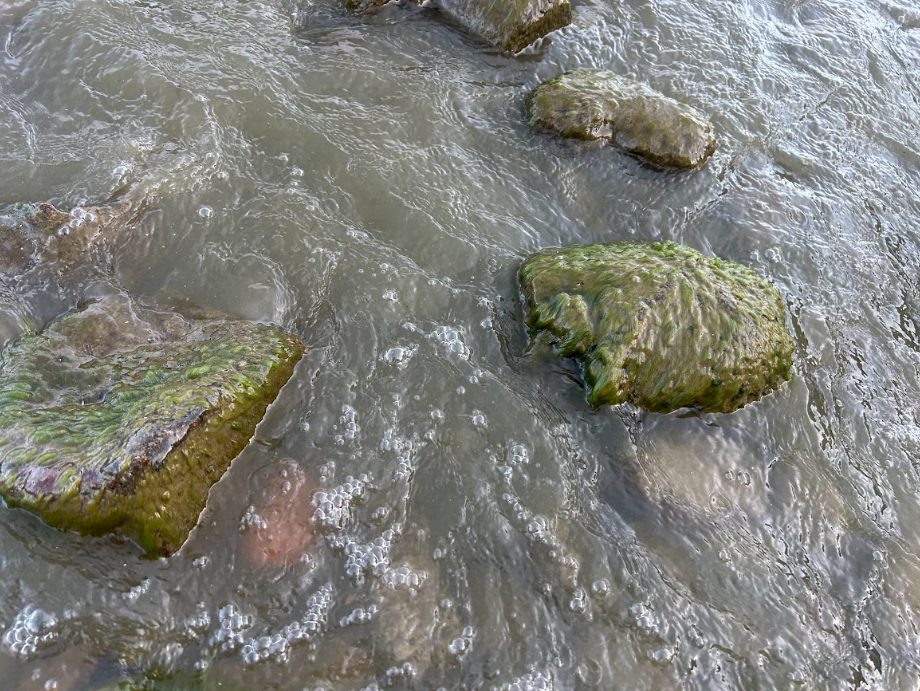
Jones Beach Filamentous cladophora algae attached to a rock
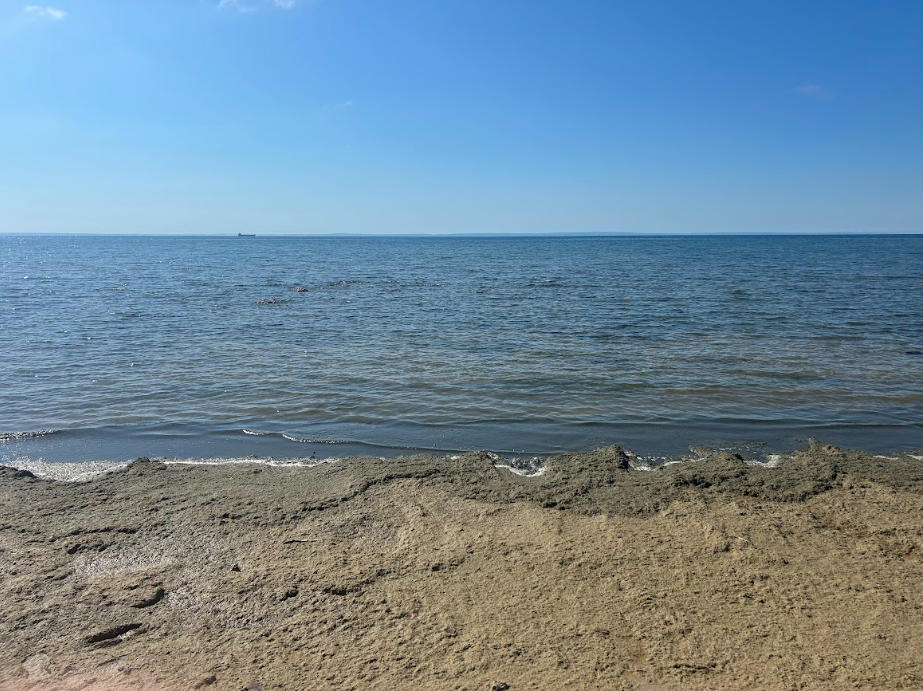
Cladophora Algae at Reeb’s Bay Public Beach taken by a VAST Community Scientist
VAST In action
Jones Beach in St. Catharines was one of five that we routinely monitored at. We quickly identified it as a priority site due to frequent concerns about excess algae. Reviews from beach goers cite garbage, dead animals, and the excessive black sludge of rotting algae. Despite this, there’s an equal number of positive perspectives on the beach as well, mostly citing lovely scenery for a nature walk, dog walking, and paddling. Some locals even lovingly refer to it as ‘sunrise beach’. Even some mention of indigenous drumming circles hosted along its shores.
Back in 2017, Niagara Public Health ceased sampling of the beach due to a reported failure rate of 60-80% for bacterial water quality between 2015-2017. As an artificial bay is formed by the Port Weller Canal, the waters of Jones Bay are often calm, and cycle far less than Sunset Beach for example.
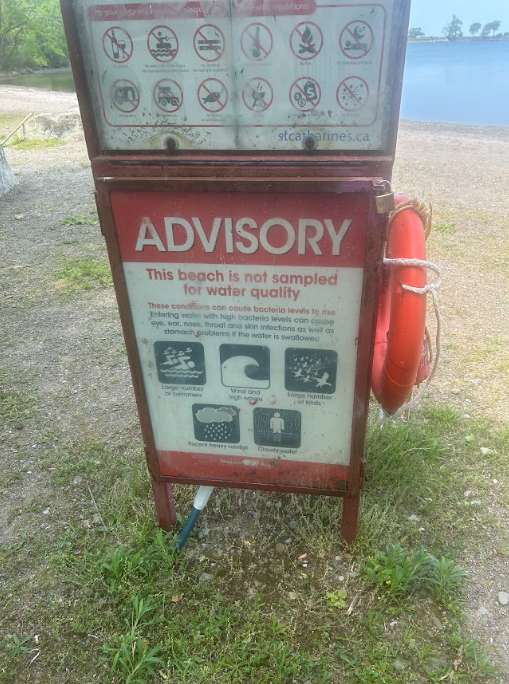
Sign indicating lack of sampling at Jones Beach St Catharines
VAST allows community members and environmental scientists to consistently record information on when, and why this Cladophora algae washes up so coastal management groups can make informed decisions. The information from these surveys can tell us all kinds of useful information including when and where coastal concerns are present and to what degree. This helps to inform coastal decision makers on how to manage their sites, and beachgoers on the state of the beach to inform when and where they interact with the water.
Completing one is as simple as taking 15 minutes to answer a few questions on what you see, and submitting a few photos and these photos can make some powerful videos like you see below.
All of this to say, VAST is a fantastic low barrier way to volunteer your time, especially for those who naturally spend time by the shore or are interested in knowing more about what can impact their shorelines. A simple 15 minute survey, or even just snapping a few photos, can help contribute to a network of information on the state of our shorelines.
As things warm up for the summer, if you think you would be interested in submitting a survey of your own, feel free to check out our VAST Volunteer Portal, fill out our VAST Volunteer Application Form , or email the team at VAST@swimdrinkfish.ca