
Record-Breaking Rain in Edmonton
What a rainy season it's been here in Alberta! It's all anyone in the Edmonton area seems to be talking about. And with many affected by flooded basements, road closures, and emergency water supply alerts, it's no wonder.
How much rain did we really have?
It was the wettest June on record. That means rainfall has been higher than in any June Edmonton has ever seen since meteorologists started recording data in the late 1800s.
Edmonton received a total of 264 mm of rain last month, much higher than the previous record of 217 mm and almost triple the average of around 79 mm. For everyone alive today, this was the rainiest June we've ever seen.
The rainy weather has continued into July, with recent thunderstorms knocking down trees and further contributing to our wet summer.
How did this impact water levels of the North Saskatchewan River?
River levels have spiked after each consecutive storm, leading to a prolonged period of abnormally high flows spanning from late June into early July.
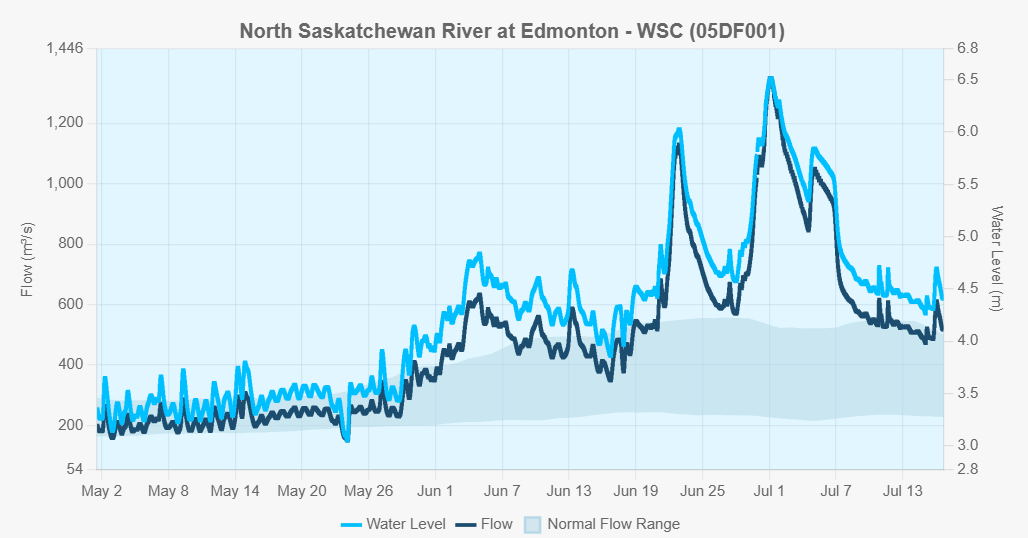
Graph showing water levels and flow of the North Saskatchewan River at a station in central Edmonton, AB. The shaded area represents the 25th to 75th percentile of flow discharge. Graph from rivers.alberta.ca.
As the Edmonton Water Monitoring Coordinator for Swim Drink Fish, I've talked with people at our sites who commented on how they'd never seen the river levels so high. Below are photos from one of our sites, Capilano Boat Launch in Capilano Park, where high water levels have closed the boat launch to vehicles for weeks and cut off access to the adjacent trail.
You'll notice that the angle of my photos changes, simply because the spots where I had been standing the week before became too deep to wade in with rain boots!
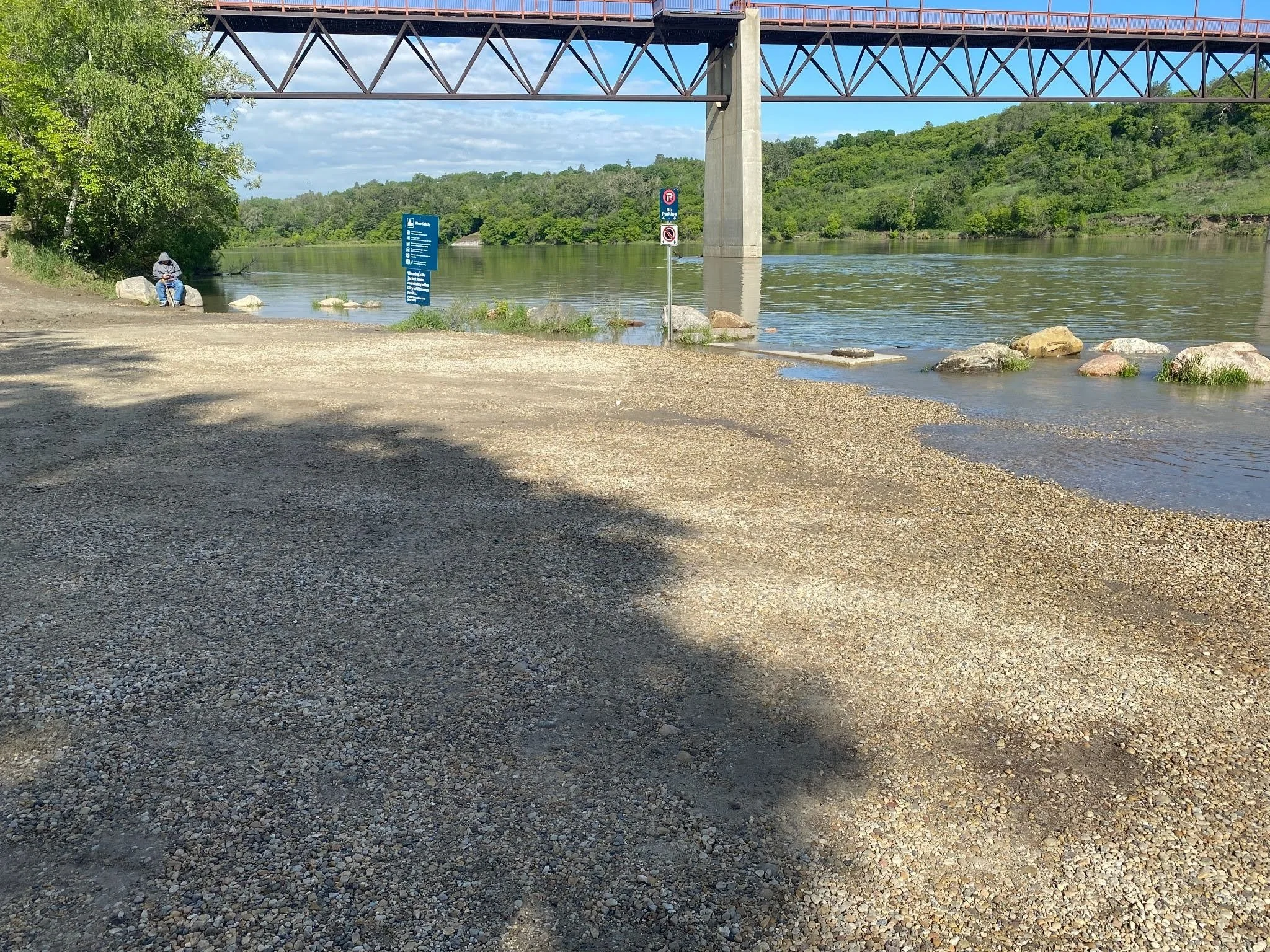
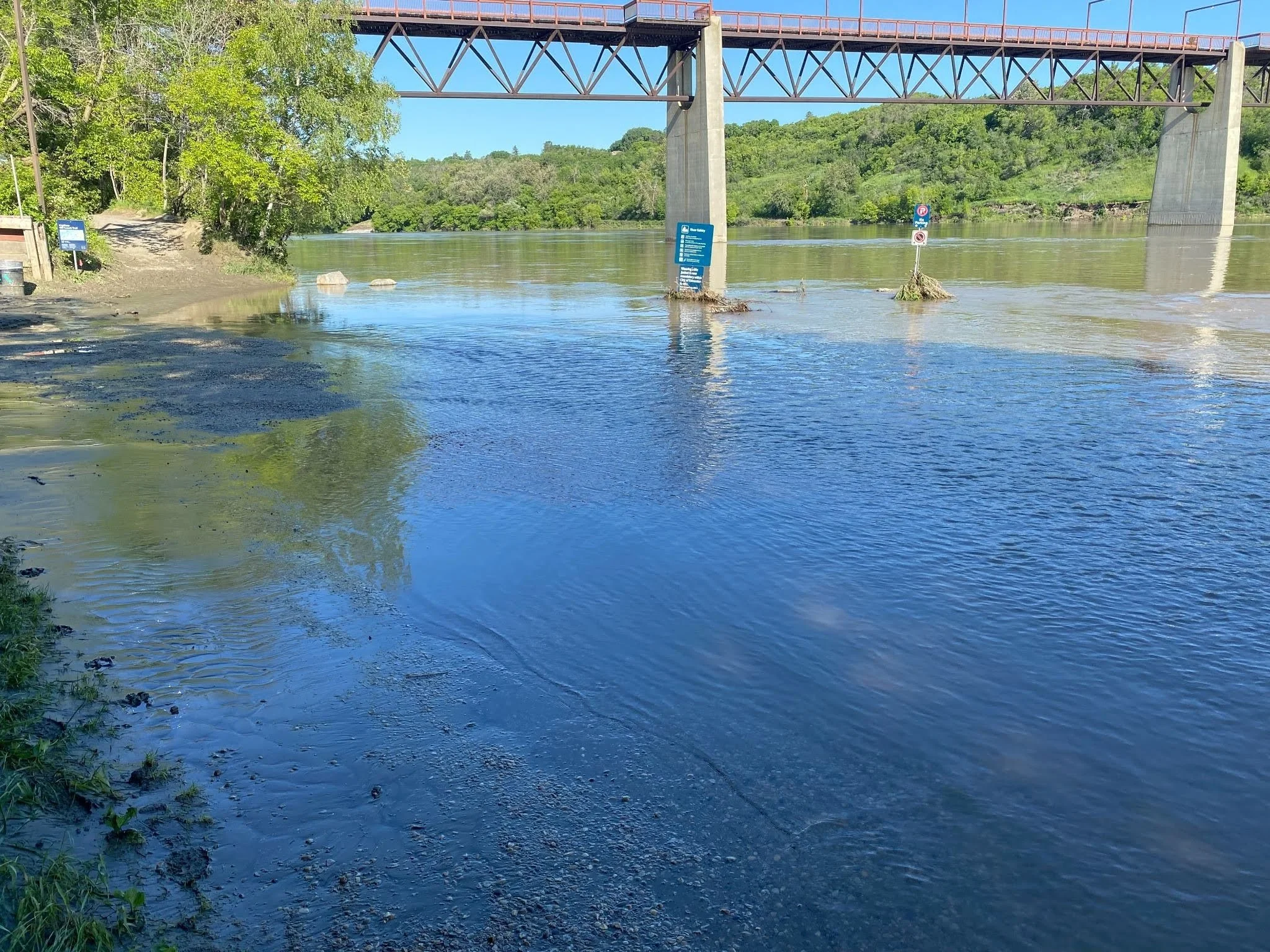
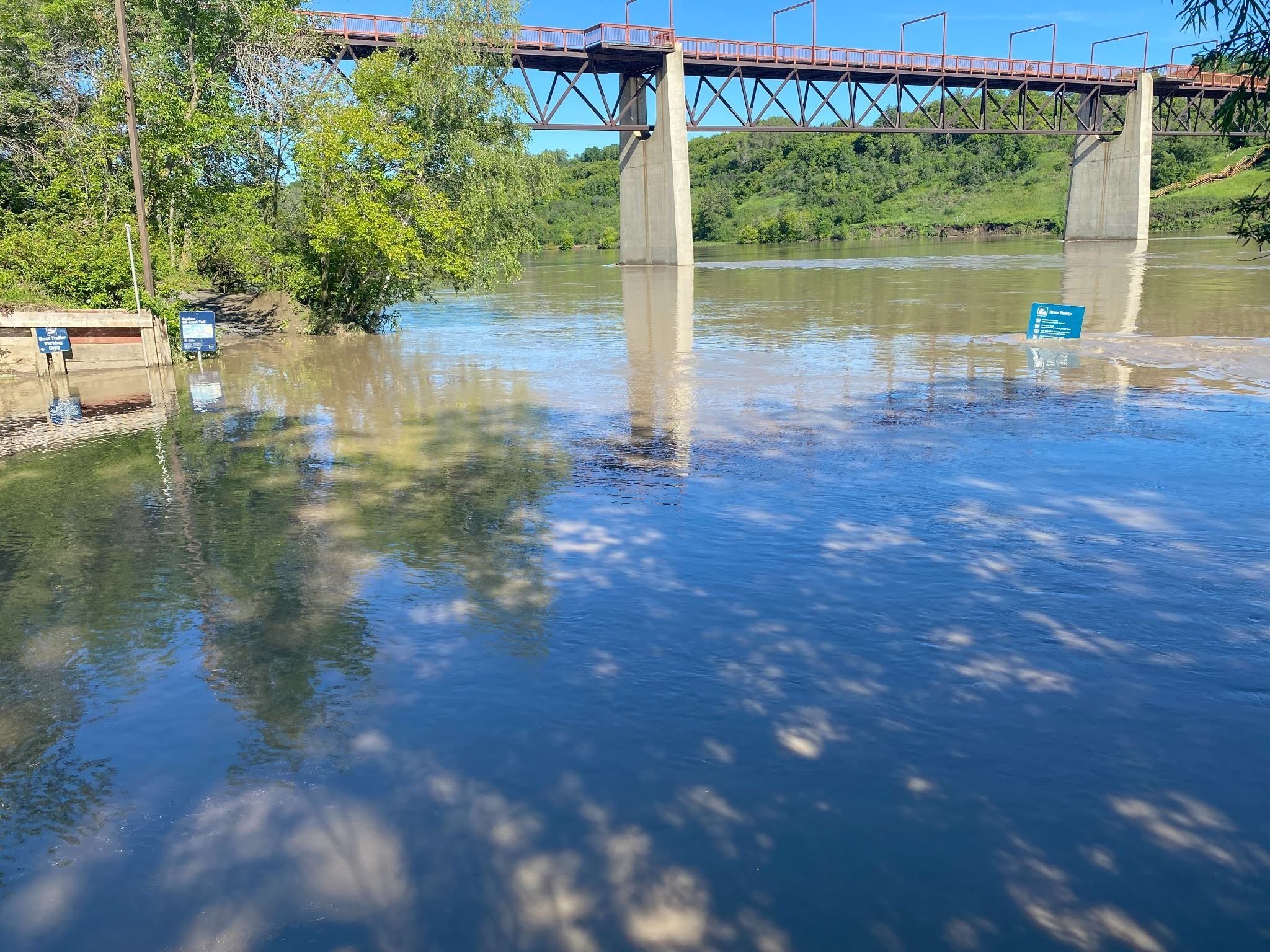
Capilano Boat Launch in Edmonton over June 19, June 25, and July 2, 2026. Images taken by Jennifer Chen
How did this impact the water quality of the North Saskatchewan River?
A wet June has meant flooding, overwhelmed sewer systems, and higher levels of runoff into our rivers and streams. All of this leads to water quality taking a hit, especially with E. coli levels rising after heavy rain.
Edmonton, like many older cities in Canada, has a sewer system that includes Combined Sewer Overflows (CSOs). With these systems, rainwater runoff is combined in the same network as our household sewage. This means that during heavy rainfall, the system can overflow and release untreated or partially-treated wastewater into the river.
This wastewater then adds higher levels of fecal bacteria, such as E. coli, into the river. This is a problem! These bacteria can make humans and animals sick when present in high enough concentrations.
In 2024, over 3 million m² of wastewater was discharged from a single Combined Sewer Overflow point near Capilano Boat Launch (Government of Canada open dataset).
Why did we get water supply alerts?
Many municipalities across Alberta, including Edmonton, issued alerts to residents urging them to reduce non-essential water use. But if we're getting so much fresh rainwater, why do we need to save water? It turns out it's not about the water coming in through the tap; it's about the water going down the drain.
Remember our combined sewer systems? By temporarily cutting down the amount of wastewater draining from showers, washing machines, and dishwashers, we can reduce pressure on the sewage system. This means less untreated wastewater entering the river through Combined Sewer Overflows.
Municipalities issue these water supply alerts in an attempt to protect water quality in our local water bodies.
Is this our future?
These kinds of intense rainfall events will only become more frequent with climate change.
Colder air holds less moisture; that's the reason why your skin gets so dry in the wintertime. The opposite is also true: warmer air holds more moisture. As average temperatures increase, the air in Edmonton can hold more moisture than before, meaning thunderstorms have more rain to pour out.
Four years ago, a scientist from Environment and Climate Change Canada predicted that climate change would lead to more intense rainfall for the Prairies. Although we have started to see more precipitation overall, the timing of that precipitation is changing. This could lead to more floods and droughts if moisture falls in intense bursts of early summer rain rather than more gradually throughout the summer.
As for the North Saskatchewan River, water levels may become increasingly variable. And unless we invest in infrastructure updates for our sewer systems, water quality contamination will continue as well. With July now delivering another heavy batch of rainstorms following June's record, it's clear these intense summer bursts are becoming our new reality.
What role does Swim Drink Fish play?
This summer, we are monitoring water quality at 5 sites in Edmonton along the North Saskatchewan River. This is part of Swim Drink Fish's goal to connect people to water; the more informed people are about current water quality, the more power they have to choose where and when they enter the water.
Everyone should be able to enjoy the river in various ways, from the shore or on the water. At Swim Drink Fish, we will continue connecting people to the North Saskatchewan River and advocating for cleaner water.
What role do residents have to play?
Remember, in the Edmonton area, our water comes from the river, and our wastewater eventually flows back into it. We are part of a larger watershed that stretches from the Rocky Mountains to Hudson Bay, and we each have a responsibility to protect it.
Here are individual actions you can take:
Use less water during heavy rainfalls to reduce the amount of sewage that may flow into the river. This could mean taking shorter showers or waiting for a non-rainy day to run a load of laundry.
Wait 48 hours after heavy rainfall before swimming in local water bodies.
Stay informed by checking Swim Guide for the latest water quality results.