Swim Drink Fish and Swimmable Cities Partner for the Future of the Great Lakes
At Swim Drink Fish, we’ve always believed that restoring a body of water isn’t a sprint — it’s a steady, determined journey. For 25 years, our movement has grown from a simple conviction: everyone deserves water that is swimmable, drinkable, and fishable.
Today, that journey enters a bold new phase.
We are thrilled to announce a new partnership between Swim Drink Fish and the global Swimmable Cities initiative.
A Global Champion Joins the Mission
Matt Sykes is a visionary leader who has spent years shaping and promoting the idea of Swimmable Cities around the world — cities where people are invited back to their waterfronts, not pushed away from them. His work has helped urban centres re‑imagine their relationship with water, proving that safe, accessible, well‑designed shoreline spaces are both possible and transformative.
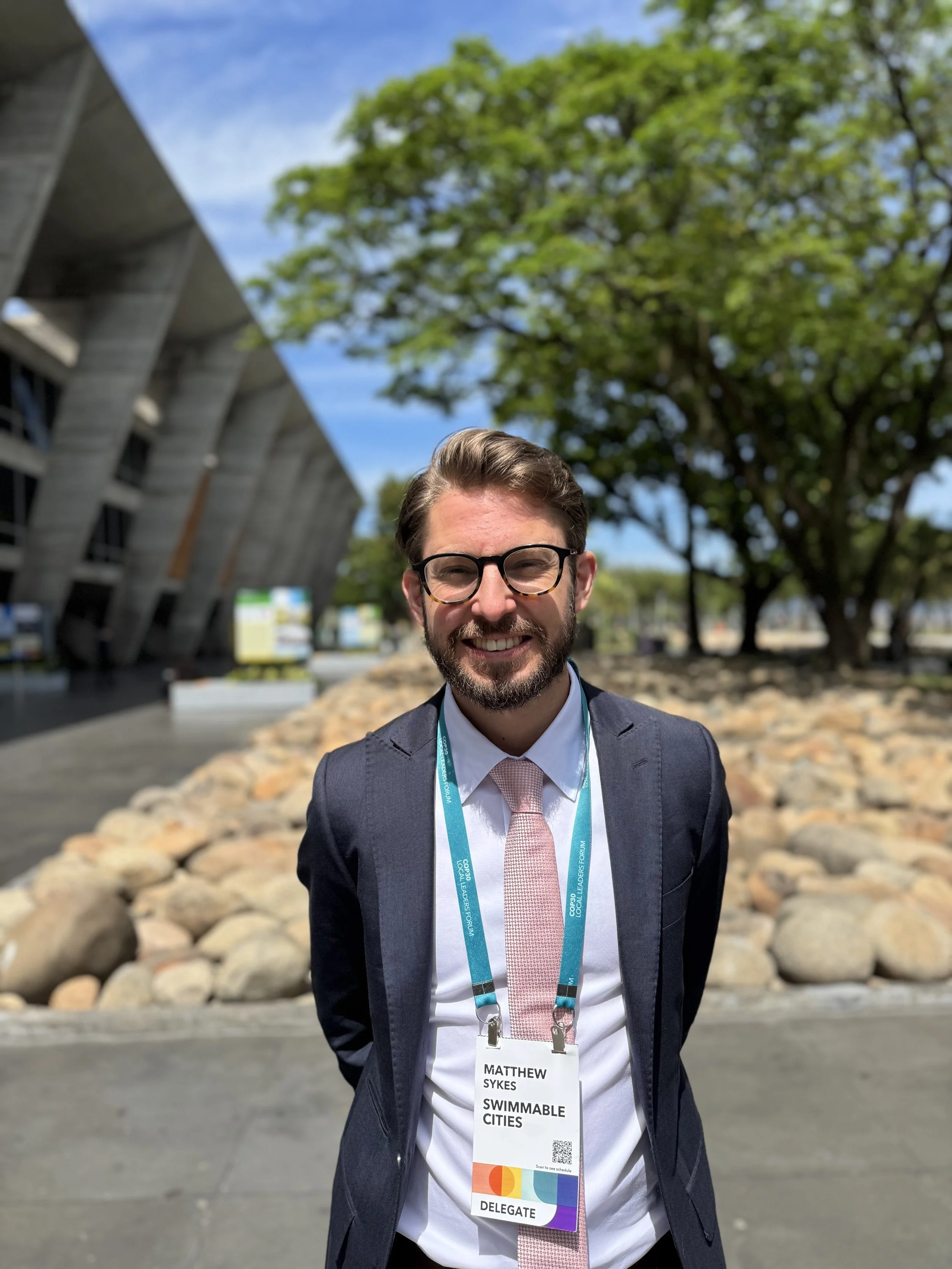
Matthew Sykes, Swimmable Cities
Now, Matt is bringing that global experience to Swim Drink Fish to help us scale our mission across the Great Lakes, the St. Lawrence River, and beyond.
Our Roots: From Activism to Accountability
Our story began, quite literally, in the water. It was inspired by Marilyn Bell’s historic 1954 swim across Lake Ontario — a triumphant moment overshadowed by distance, temperature, and pollution.
Decades later, when we launched Lake Ontario Waterkeeper in 2001, I took a symbolic dip off Ontario Place with Bob Hunter, founder of Greenpeace. Despite living in Toronto for years, Bob told us he had never swum in Lake Ontario — only in his pool. That disconnect marked the beginning of our journey to make Canadian cities swimmable again.
Growing up on Wolfe Island, I saw how sewage from Kingston clouded the waters I loved. Urban problems upstream were affecting our rural communities downstream. Years later, while driving, I heard CBC’s Michael Enright ask, “Is it safe to swim in the Great Lakes?” The question demanded more than a simple yes or no. The lakes were swimmable — except where pollution from our cities and industries made them unsafe. I realized that people who cared about the lakes needed to be able to answer that question with facts, and that those facts needed to matter in the courtroom.
Building a Movement Through Evidence and Action
We began with data. We sampled relentlessly. That evidence became the backbone of our impact:
Legal Action: Challenging polluters — and even cities — when beaches like Bluffer’s Park weren’t meeting basic safety standards.
Investigations: Working with scientists, experts, and legal minds to hold decision‑makers accountable.
Advocacy: Pressing the Ontario Government to uphold F‑5‑5 standards under the Ontario Water Resources Act, requiring 90% swimmability — a benchmark most municipalities missed.
In 2008, with support from RBC, we launched Swim Guide, giving the public access to water sampling data from beaches and public water parks. Today, Swim Guide provides real‑time information for more than 10,000 beaches and helps millions of people find safe water.
In 2017, with the Weston Family Foundation, we supported Kingston in creating the Gord Edgar Downie Pier — a signature example of what restored water quality makes possible: clean water, accessible design, shallow and deep zones, a diving platform, ladders, and a beach that reconnects the community to Lake Ontario.
In 2025, we announced the WAVE Prize, also with support from the Weston family — five grants of $3–15 million to B.C. local governments and First Nations to build innovative natural swimming structures. This province‑wide initiative will transform waterfronts into vibrant, inclusive public spaces that strengthen community health and deepen our connection to nature through world‑class design.
The Next Horizon: The Swimmable Cities Charter
Matt’s arrival signals an ambitious scaling of this work.
In July 2024, Matt and his team launched the Swimmable Cities Charter, inspired by the Paris Olympics and the cleanup of the River Seine. The Charter has since been signed by more than 200 organizations across 109 cities in 36 countries.
Swimmable Cities is now inviting more leaders across the Great Lakes and the St. Lawrence River to commit to:
Access: Safe, healthy, and swimmable waterfronts with high‑quality public design.
Accountability: Transparent sharing of water quality information, with tracking and ranking of improvements over time.
Investment: Long‑term funding for green infrastructure that protects, restores, and activates these waters for generations.
Alongside the Great Lakes and St. Lawrence Cities Initiative, governments at all levels, Canadian Geographic, and Indigenous partners through the Biinaagami Project, we are advancing a renewed commitment to our waters — one rooted in shared responsibility and connection.
We are incredibly excited about the knowledge that Matt and the Swimmable Cities team bring to this partnership, and we can’t wait to see what comes next.
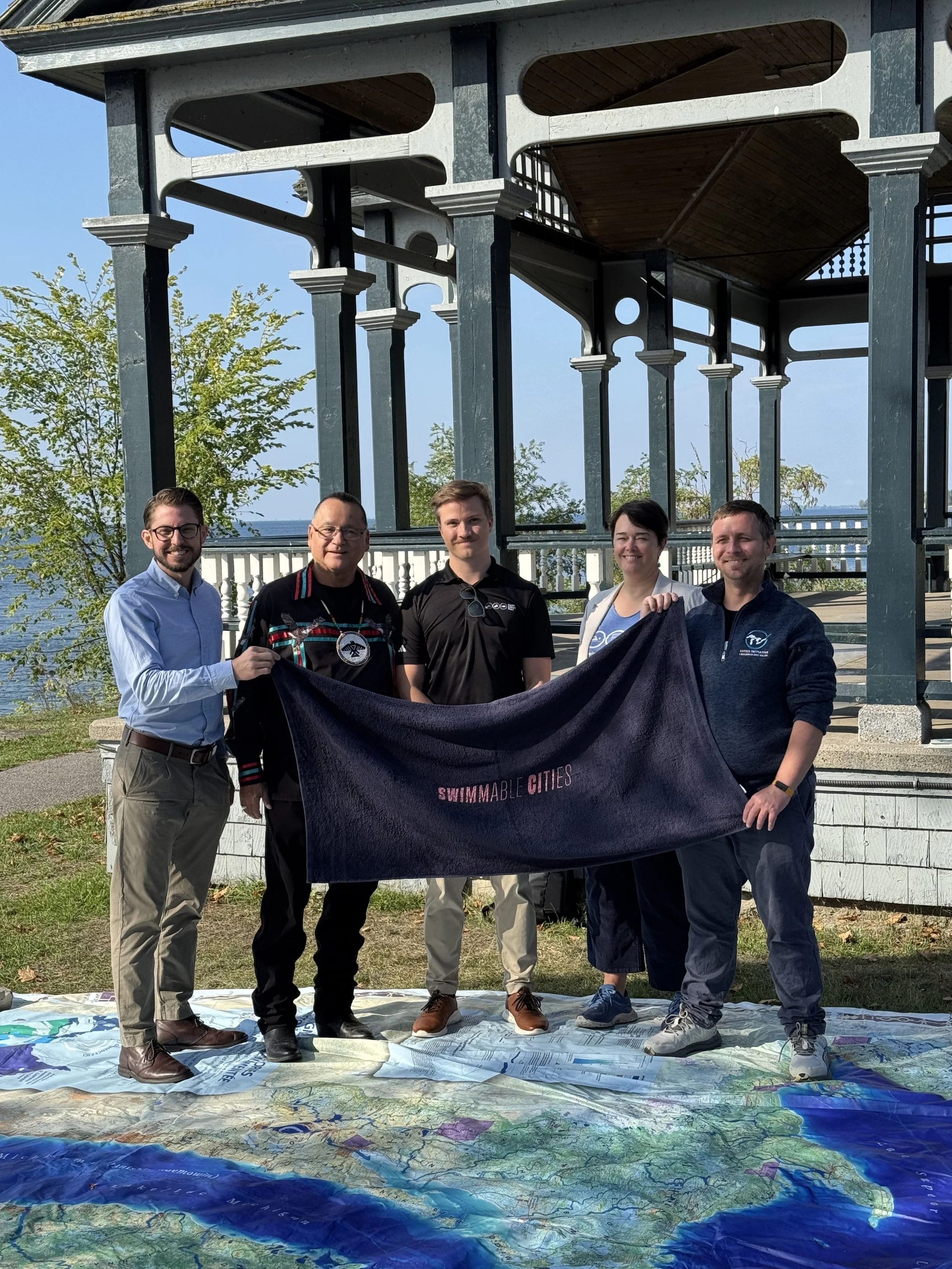
Matthew Sykes, Patrick Madahbee, Gregary Ford, Jennifer Ruddy, and Phillipe Murphy-Rhéaume
One Stroke at a Time
When Marilyn Bell crossed Lake Ontario at 16, she said she kept going by focusing on one stroke at a time.
Restoring the Great Lakes — and creating cities where everyone can learn to swim and swim safely — requires that same persistence.
With Matt on board, our strokes are stronger, our momentum is growing, and our vision is clearer.
Welcome to the team, Matt — and welcome Swimmable Cities.
Let’s get to work.