
All About Algae
Every summer swim season, we get lots of questions about algae on local shorelines, including:
Is it safe to swim?
Is it toxic?
Where did it come from?
Why is there so much of it on my beach?
Today, we’ll answer these questions and give you some tips for staying safe around algae! .
What’s with all the algae?
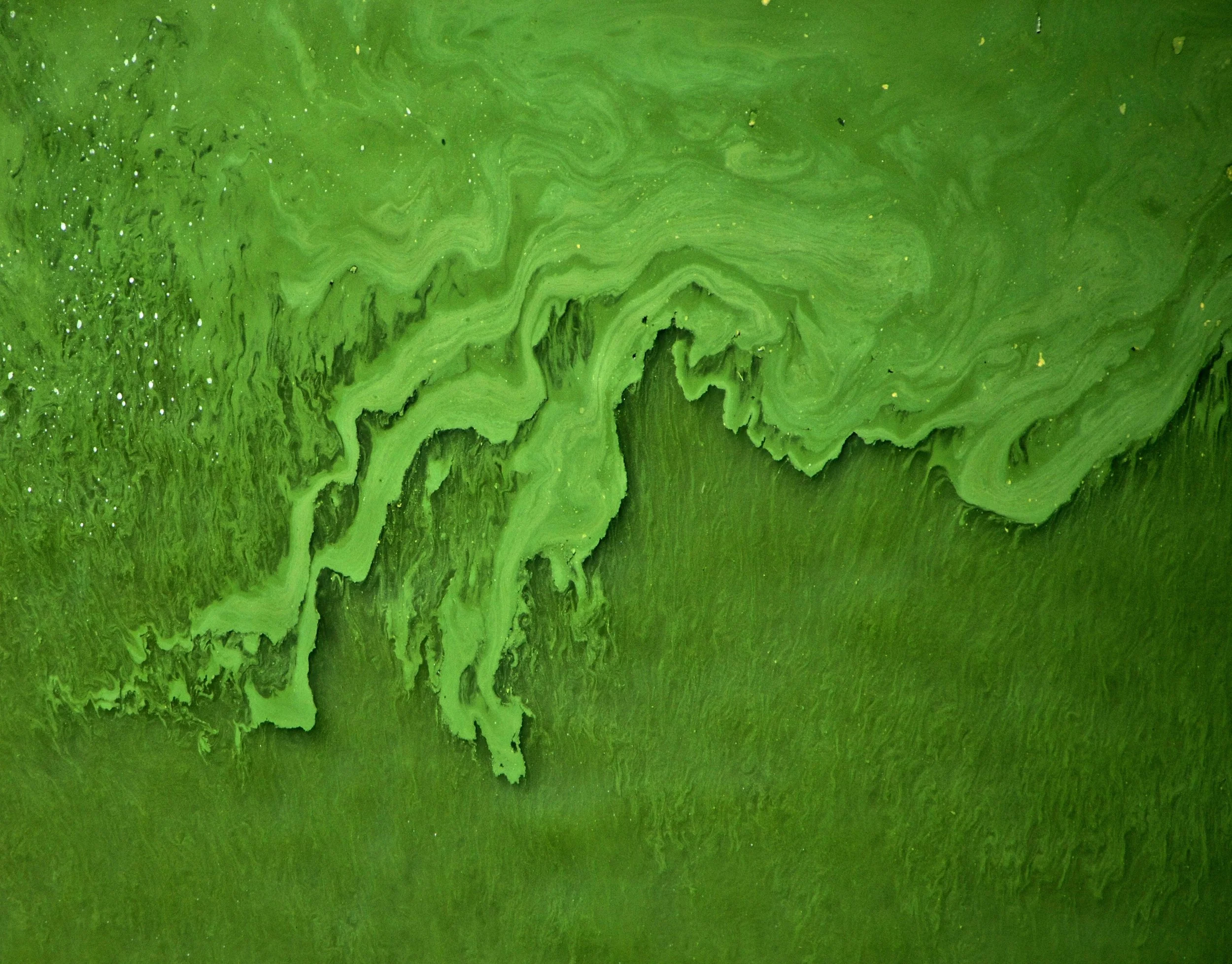
Photo by Mihály Köles on Unsplash
Much of the concern around algae is its seemingly sudden appearance on shorelines. When sandy and stony shorelines suddenly turn slimy and green, it's understandable why people would be concerned.
Algal blooms are a natural part of lake ecosystems. As waters warm, algae growth speeds up, often forming masses of algae – or blooms – in late summer. While these blooms are a natural phenomenon, high nutrient inputs from runoff, warmer waters due to climate change, and increasing water clarity due to invasive mussels all make the problem worse.
Is it toxic?
How much of a threat algae poses to you depends on the type of algae, its condition, and how you’re interacting with the water and sediment. Here we go over a few types of algae and what you should know:
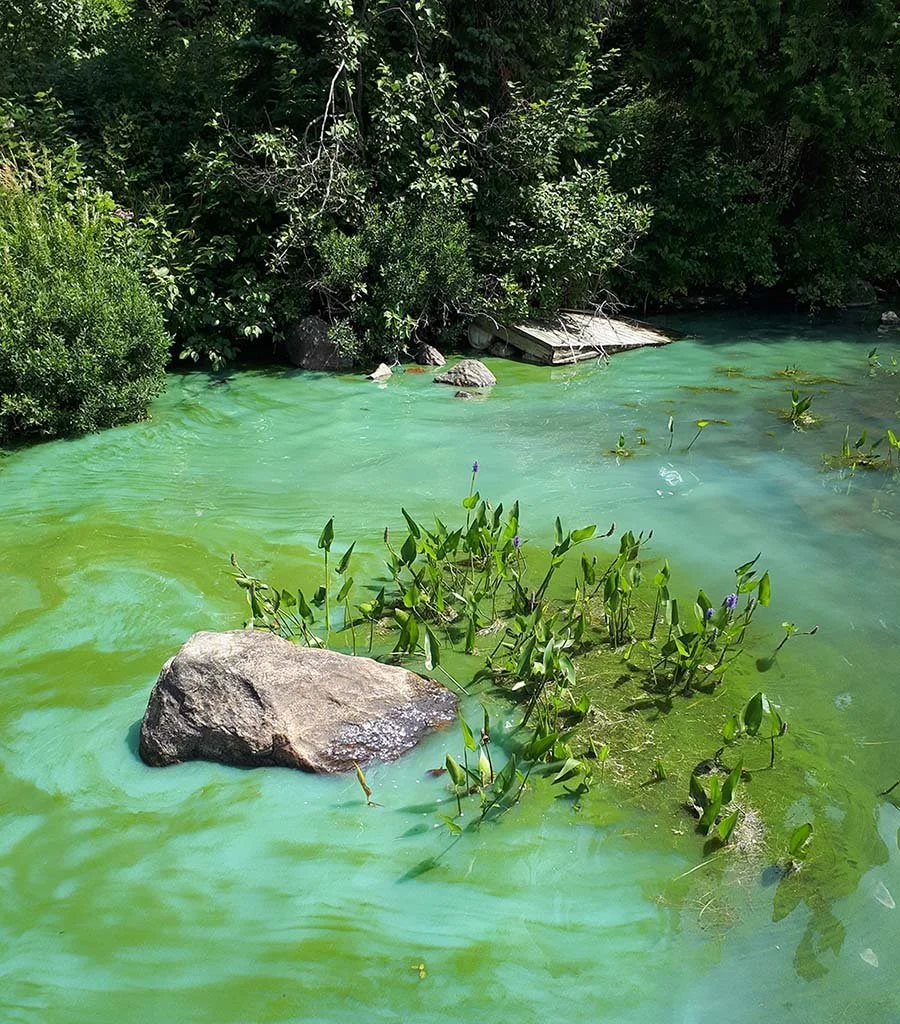
Blue green algae (Cyanobacteria) bloom, Image courtesy of Ontario Ministry of Environment, Conservation and Parks.
Blue Green Algae: An algae only in name
Blue-green algae is not algae at all, but actually a form of bacteria called Cyanobacteria. When beaches post safety warnings or drinking water quality concerns due to algae, Cyanobacteria is usually the culprit.
Cyanobacteria excrete toxins into the surrounding water which can cause people and animals who ingest it to experience gastrointestinal issues like diarrhea, vomiting, and stomach pain. Skin irritation and, in severe cases, liver and kidney damage or neurological symptoms are possible too.
Usually blue-green algae appears as a blue-green sheen or scum on the surface of the water, or causes a green-tinged cloudiness in the water often compared to pea soup.
If there is a blue-green algae bloom, it’s safest to stay out of the water! Assume any water you suspect to contain blue green algae is harmful. Report blooms to the Ontario Spill Action Centre.
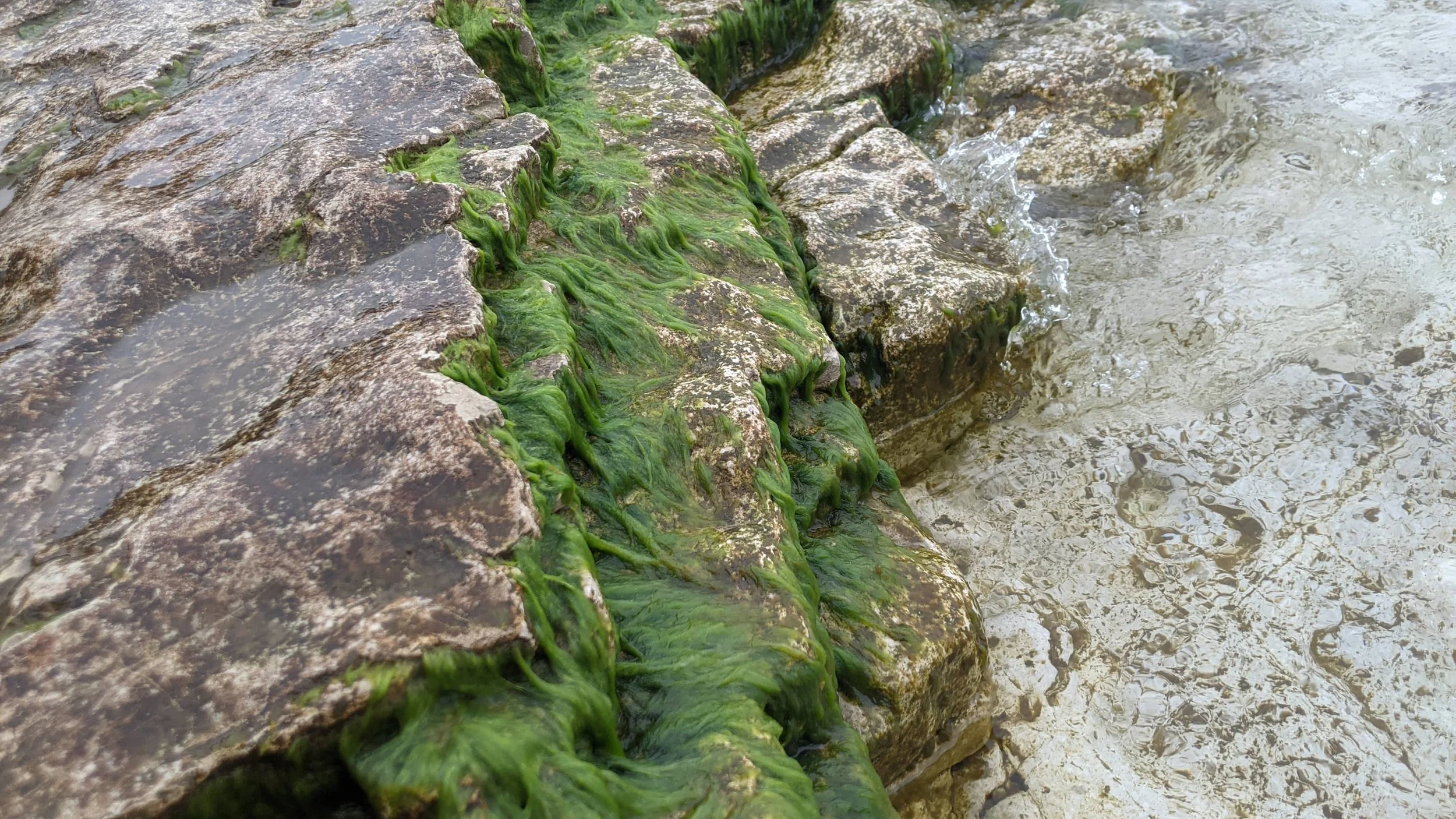
Cladophora algae washup. Photo courtesy of Swim Drink Fish Canada.
Green Algae: Slimy and unsightly but usually safe.
Green algae is a true algae. Green algae such as Cladophora are typically stringy, green plants that can be found in mats on shorelines, or floating freely in the water. Once algae washes on shore it often dies, leaving a slimy brown mat along beaches that deters swimmers.
While the mats can be unsightly they are generally not a threat to people. However, there have been some reported cases of the rotting algae harbouring botulism bacteria which can negatively impact shorelines.
How does algae impact the environment?
While a natural part of our lake ecosystems, overgrowths of algae can have many impacts on the environment and wildlife.
Both green and blue green algae can deplete oxygen in the water column, leading to die-offs of fish and other wildlife. While blue green algae is toxic in and of itself, green algae sloughs can act as a resevoire for harmful bacteria like botulism and E. coli which can harm local wildlife.
What can I do to stay safe and reduce algae in my local waters?
Check the Swim Guide for beach water quality warnings due to algae, bacteria and other hazards
Report suspected green algae blooms and Cladophora using VAST
Report suspected blue green algae blooms to the Ontario Spills Action Centre and/or to public health units.
Reduce runoff of fertilizers and other nutrient sources by:
◦ Limiting the amount of fertilizers you use
◦ Keep shoreline plants in place to absorb nutrients and reduce runoff
◦ Avoid using detergents with phosphates, which can act as a source of nutrients for algae
