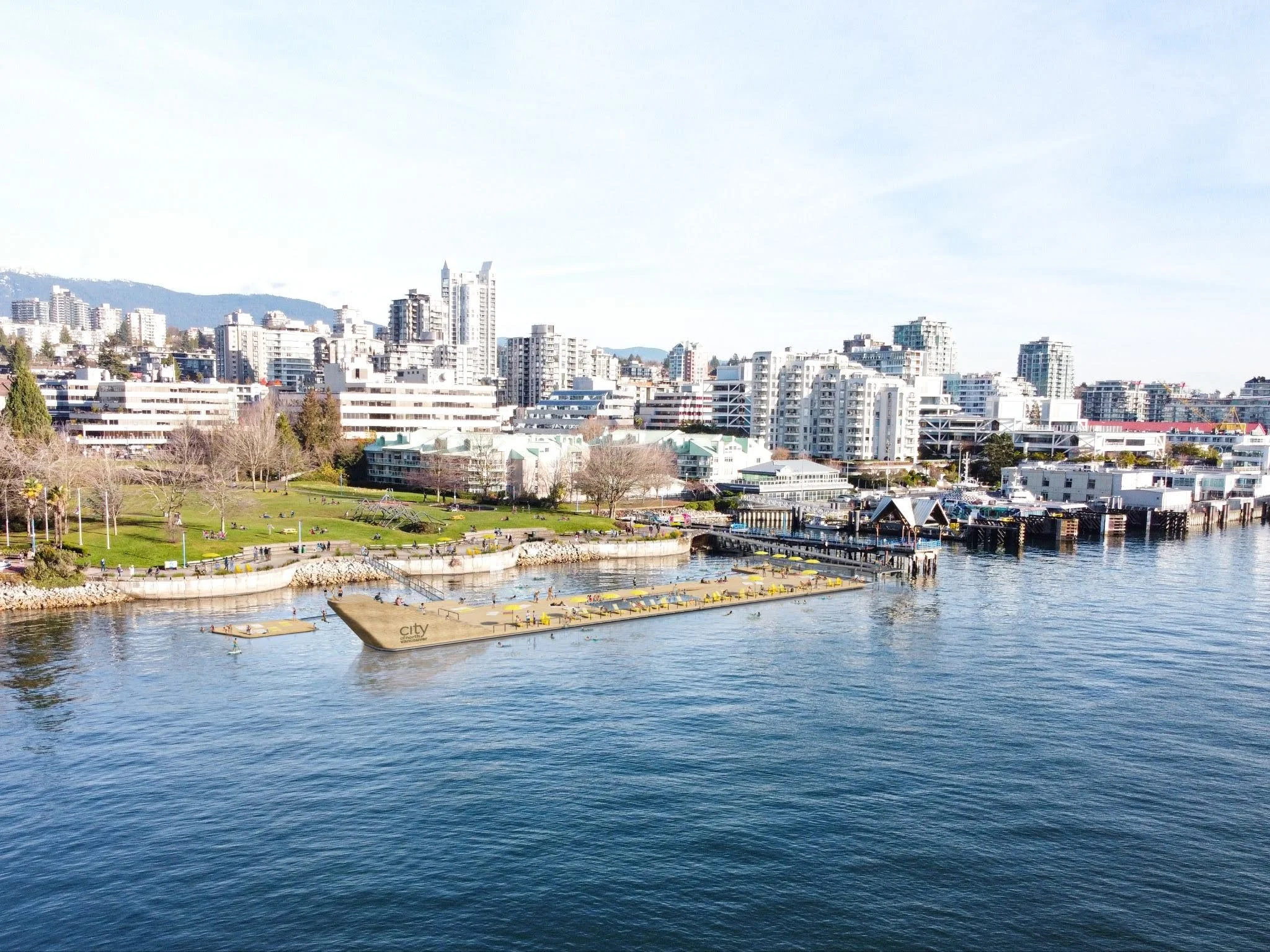
Water Quality at Waterfront Park
Water quality at Waterfront Park has been tested since 2024
Results show it has been consistently suitable for swimming
The City of North Vancouver’s Harbour Swimming Deck project is supported by two years of water quality testing by Swim Drink Fish. The results show it has been consistently suitable for swimming, meeting or exceeding health standards.
Swim Drink Fish has been conducting water quality monitoring at the site during the 2024, 2025, and 2026 summer swimming seasons and during the off-season in 2025 and 2026. This water quality monitoring follows the same testing guidelines that Metro Vancouver uses at beaches like Ambleside, Whey-ah-Wichen/Cates Park, and Kits Beach throughout the summer swimming season to ensure that the water is suitable for swimming.
2024/25 Water Quality Monitoring Report
In 2024, Swim Drink Fish also conducted a review of existing studies to assess the presence of contaminants in Burrard Inlet and evaluate whether their concentrations pose a risk to recreational activities in the area.
2024 Report to Assess The Presence of Contaminants in Burrard Inlet
2026 Waterfront Park Water Quality Memorandum
What is Swim Drink Fish measuring?
Swim Drink Fish is testing for E. coli, a bacteria used to indicate the presence of fecal contamination in the water. Testing primarily focuses on E. coli because, unlike other contaminants, it is more directly associated with acute illness risks to swimmers.
What is the difference between an acute health risk and a chronic health risk for swimmers?
Water quality monitoring is done to help estimate potential health risks from swimming in the water.
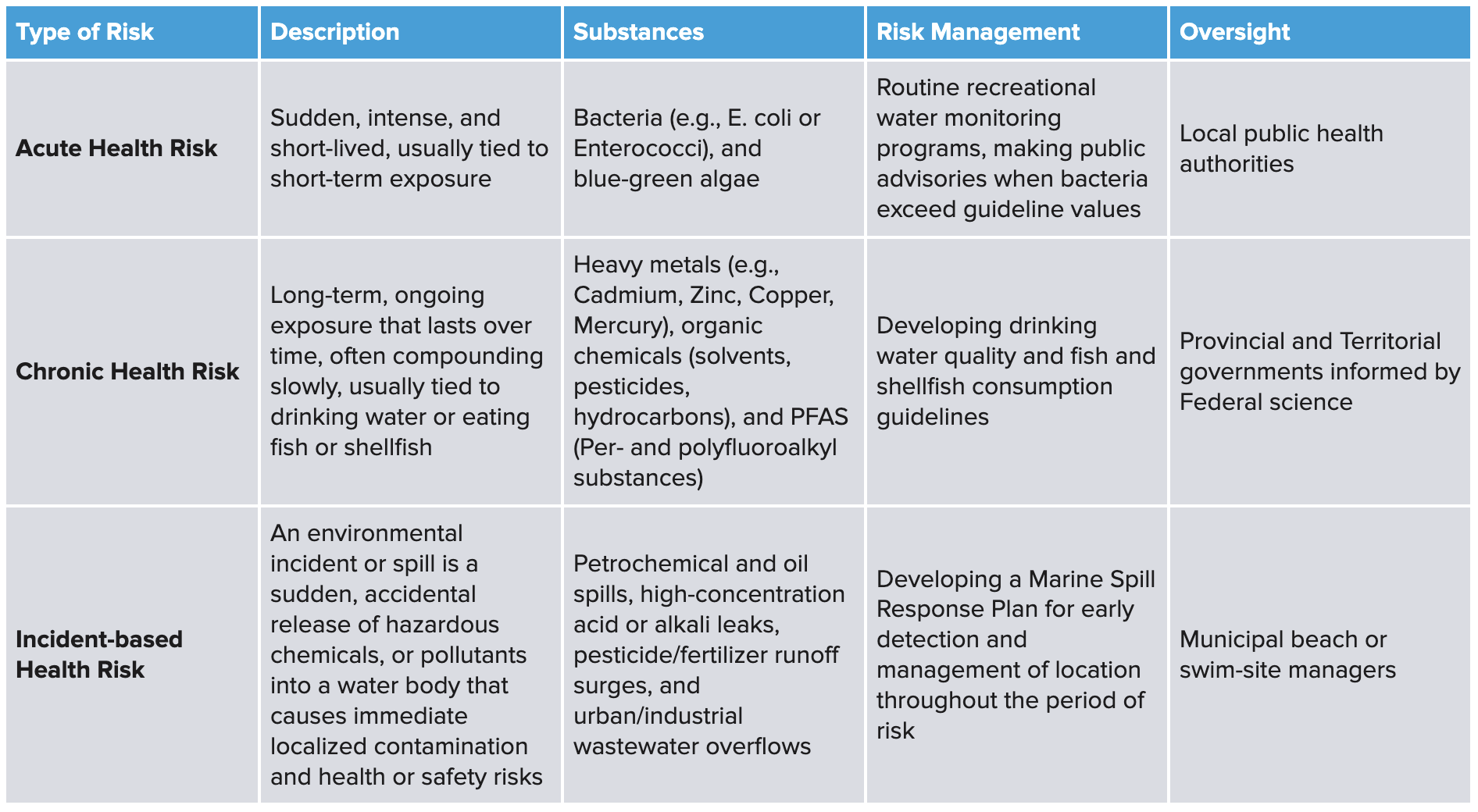
Key Takeaways for Recreational Swimmers
Acute risks are the primary concern: When it comes to being deemed suitable for swimming, local health authorities primarily focus on acute risks, which is why water quality is regularly tested for indicator bacteria like E. coli.
Chronic risks apply more to diet than swimming: Heavy metals, polycyclic aromatic hydrocarbons (PAHs), and contaminants of emerging concern (CECs) may be present in certain water bodies due to historical industrialization. However, because these contaminants bioaccumulate up the marine food web, the risk of adverse health effects is predominantly tied to consuming locally harvested fish and shellfish, rather than brief skin exposure or accidentally swallowing small amounts of water while swimming.
Incident-based risks require immediate avoidance and rely on emergency response: Sudden environmental incidents, such as petrochemical spills, industrial chemical leaks, or sudden wastewater overflows, create immediate, localized health and safety hazards. While the everyday chemical concentrations found in most recreational waters are generally too low to cause acute or chronic illnesses, large accidental spills pose a significant exception and will typically trigger immediate beach advisories or closures. During these events, swimmers must avoid the area and rely on the responsible authorities' Marine Spill Response Plans and posted warnings until the site is successfully managed and deemed safe.
The primary potential health risk to swimmers is the acute risk of contracting a water-borne illness. Some types of bacteria can cause illness, vomiting, diarrhea, and in rare instances, disease or infection.
That’s why to be deemed suitable for swimming, indicator bacteria levels in the water must be below levels set by the local health authority.
Other contaminants in the water do not pose an acute risk to swimmers. To pose a chronic risk to swimmers, one would need to regularly drink large amounts of the water, or consume fish and shellfish over a long period of time, which isn't the case with recreational use.
What’s the difference between recreational water and drinking water?
It’s important to note that recreational water quality is regulated differently than drinking water:
Recreational waters are meant for activities like swimming, where your skin is in contact with the water and you might accidentally swallow a small amount.
Drinking water is held to a much higher standard because it is consumed in large quantities over a long period of time.
What about other contaminants?
In 2024, Swim Drink Fish conducted a review of existing studies to assess the presence of contaminants in Burrard Inlet and evaluate whether their concentrations pose a risk to recreational activities in the area. The contaminants examined included heavy metals, polycyclic aromatic hydrocarbons, and contaminants of emerging concern (CECs).
The review concluded that while these contaminants have possible adverse effects to human health through the consumption of fish and shellfish, the low concentration of the contaminants in the water column do not pose any acute risk to human health for the purposes of recreational swimming. Download the full review here.
To support an ongoing comprehensive understanding of site conditions, Swim Drink Fish is conducting additional water quality testing and analysis from a chemical perspective to further demonstrate the site’s suitability for swimming.
Why do bacteria levels change?
Environmental conditions like rain and temperature can all influence levels of bacteria. Rainfall and stormwater runoff can carry bacteria from urban parks and other land surfaces into the water. This is the reason Vancouver Coastal Health recommends avoiding swimming in any open waters for 48 hours after heavy rains.
Swim Drink Fish has been conducting water quality monitoring at Waterfront Park during the 2024, 2025, and 2026 summer swimming seasons and during the off-season in 2025 and 2026. The water meets or exceeds health standards for swimming because E. coli bacteria levels in the water are consistently below levels set by local authorities.
Since rain and temperature can all influence levels of bacteria, we have split our data into two graphs: summer (May to Sept) and winter (Oct to April). The summer data corresponds with the months we expect to see the highest use of the Harbour Swimming Deck.
Biological Water Quality Testing Results
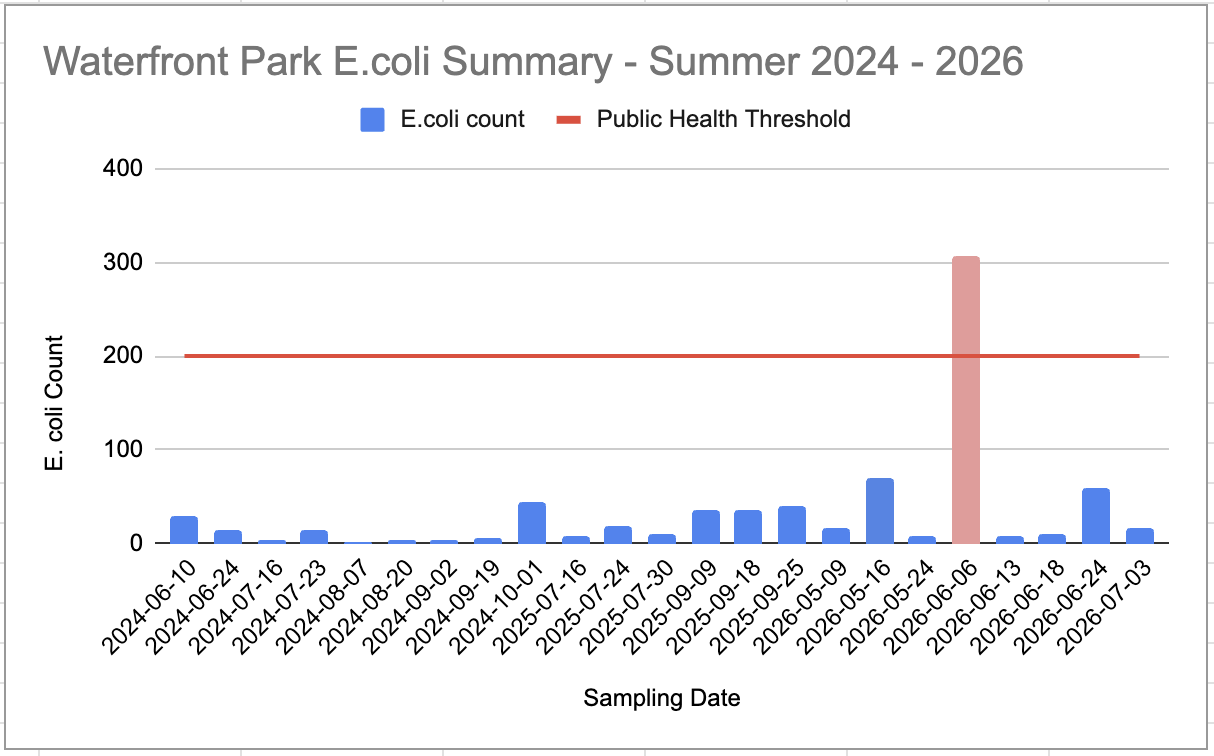
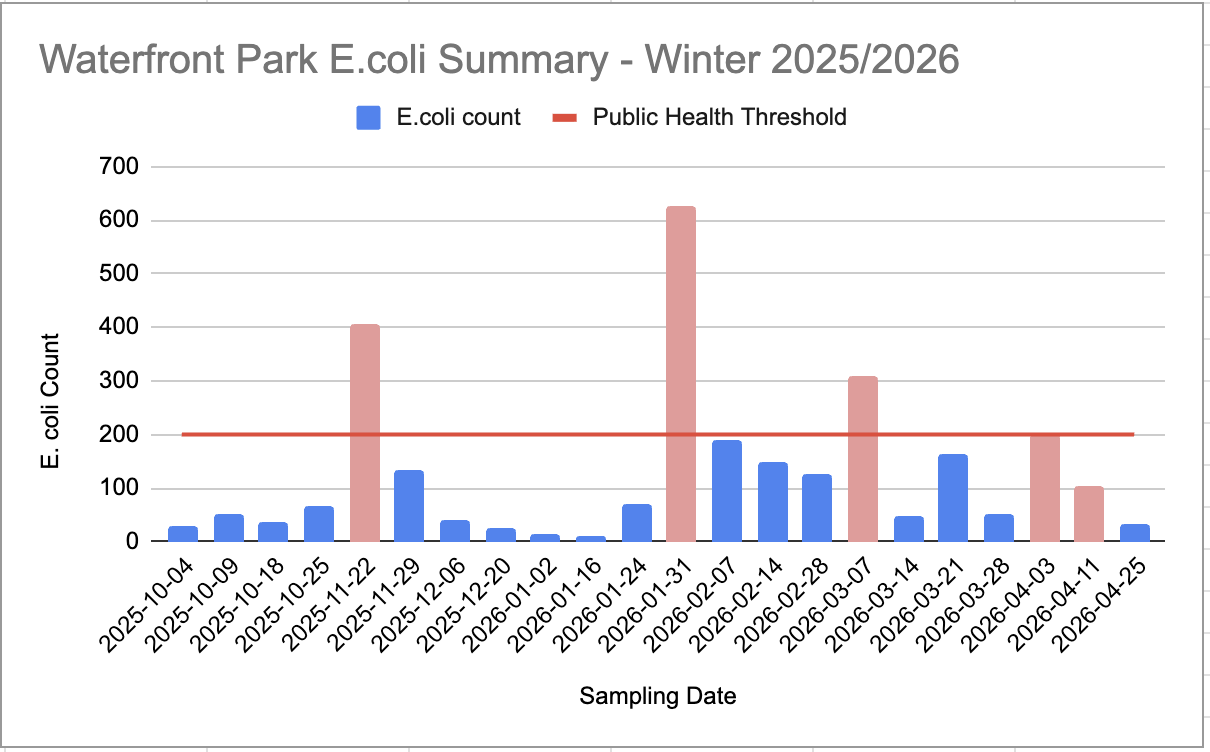
Peach-coloured bars indicate when the geometric mean (a type of average of samples that day) is greater than 200 E. coli/100 mL or that one individual sample exceeds 400 E. coli/100 mL.
When E. coli levels exceed the guideline values, local authorities will investigate further and take appropriate action.
Download the 2024/2025 water testing report here.
A 2025/2026 report will be available following the summer swimming season.
Water quality monitoring will continue.
Swim Drink Fish will continue to monitor E. coli levels. Once the deck opens, Metro Vancouver, in partnership with VCH, will test Waterfront Park as part of its recreational water quality monitoring program. When the Harbour Swimming Deck opens to the public, water quality results will be available on Metro Vancouver and VCH’s websites.
Natural Water Swimming
Swimming at our local parks and beaches
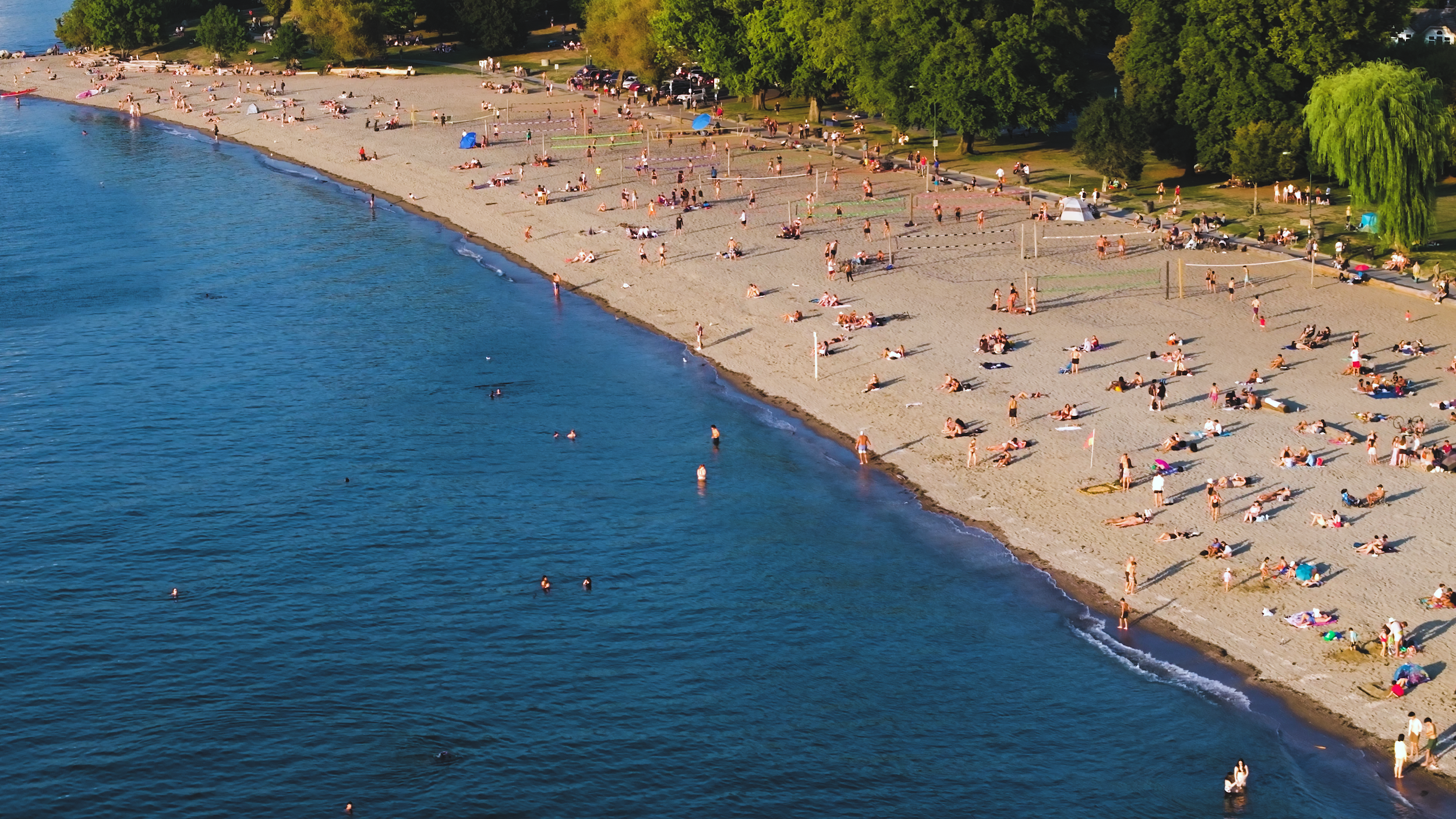
The Vancouver region is home to a great selection of recreational beach venues which provide opportunities for aquatic recreation. Water quality at recreational beaches throughout the Metro Vancouver region is generally very good, but there is always some level of risk when swimming in natural bodies of water. Most of the time, there is a low chance of getting sick from swimming at local beaches, but any time there is an elevated risk, Public Health will recommend that people stay out of the water until the chance of illness diminishes.
Swimming at Waterfront Park
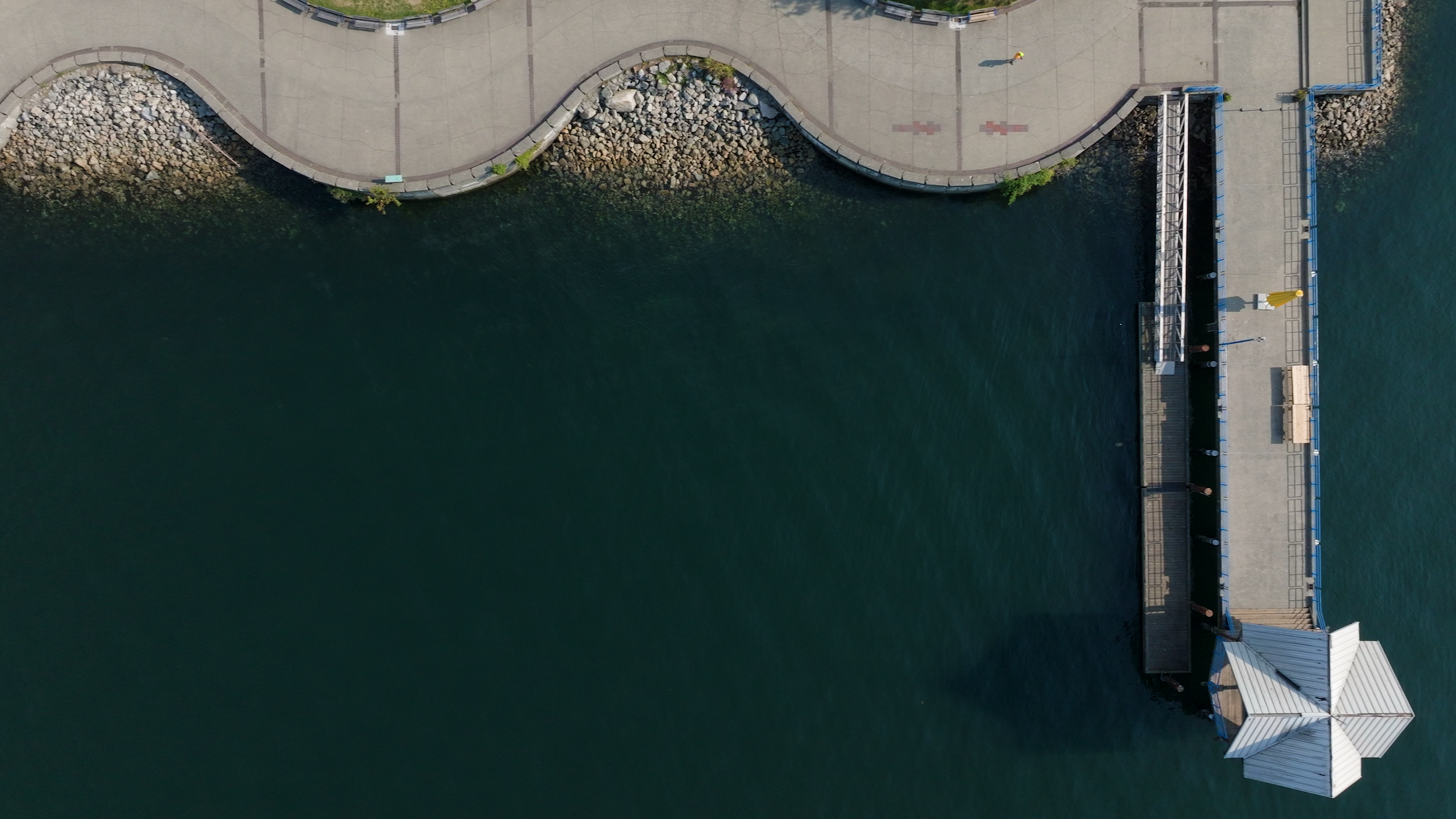
The Harbour Swimming Deck is an innovative, natural water swimming structure. It will provide the public with direct access to the marine waters off Waterfront Park, similar to the open water swimming that you might experience at Ambleside, Whey-ah-Wichen/Cates Park, or Kits Beach.
The waters here are well-circulated and flushed regularly by the tides and currents between the Narrows. Recreational swimming already occurs throughout Burrard Inlet and English Bay, where public beaches and swimming areas coexist with marine transportation, marinas, and commercial vessel activity. The Harbour Deck would be monitored and managed using the same public health and water quality standards applied at other designated swimming locations across the region.