
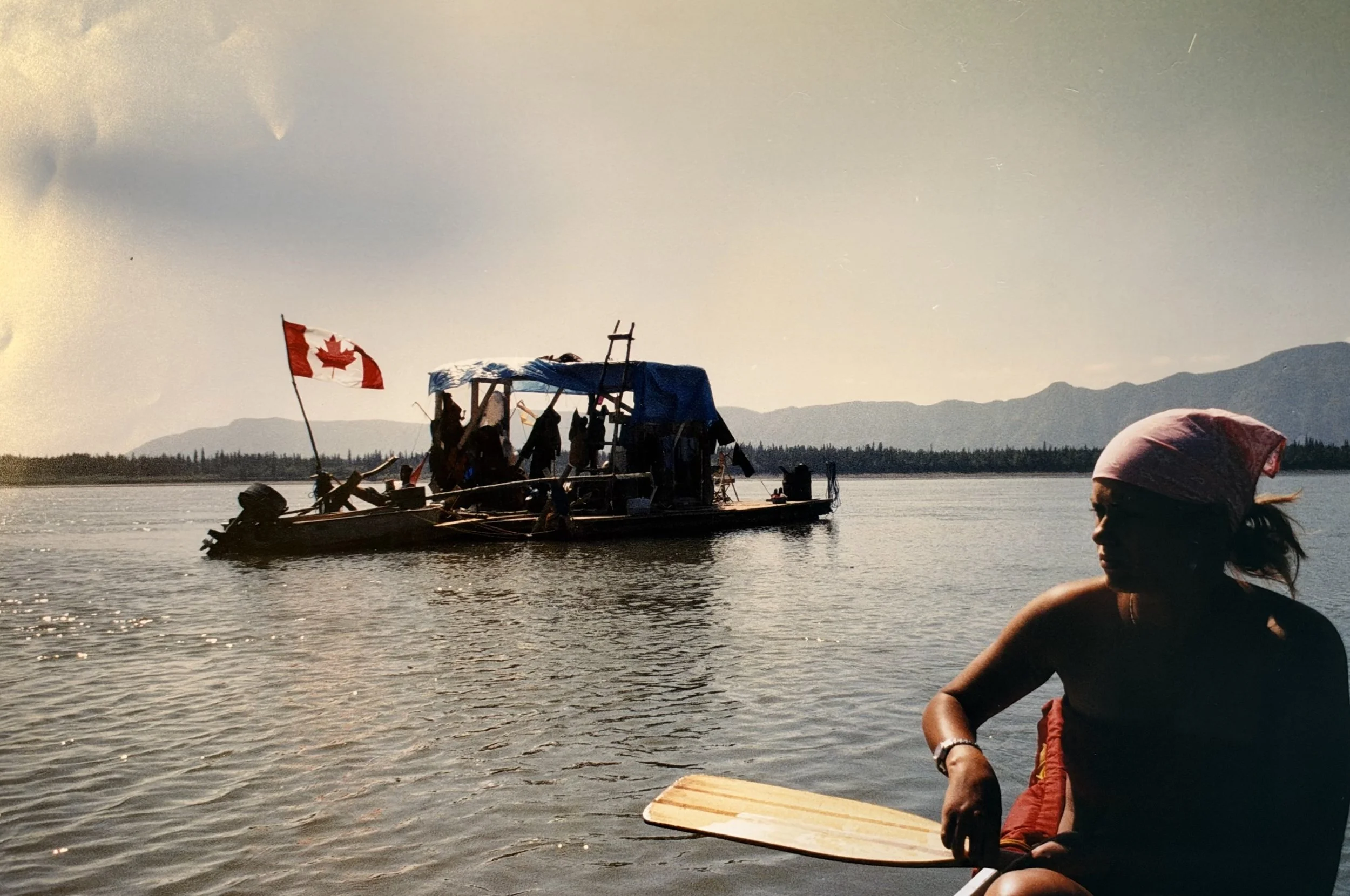
Mackenzie River, July 2004
By Brett Rogers, President & CEO, Swim Drink Fish
My road to becoming CEO of Swim Drink Fish was not a straight line. It was literally a decades-long meandering river, with its share of beautiful riverbanks and turbulent waters, passing through places of incredible beauty, across industrial wastelands and pretty much everything in between.
The river analogy is truly the best way I can describe it. And like a river expedition, it was an adventure.
I've worked in many places, using many different skills. I turned an idea scribbled on a BlackBerry into a four-part History Channel series about historical survival, built a national HR partnership with the Canadian Chamber of Commerce, worked in business development in insurance, and somewhere in between, served as interim Executive Director of the Onakawana Education Fund, supporting a Cree family camp for youth.
But nothing prepared me to lead the organization Mark Mattson created 25 years ago quite like my river expeditions.
Beginning in my early twenties, I spent more than a year of my life aboard vessels I built by hand, travelling three of North America's great rivers: the Mackenzie River, north to the Arctic Ocean; the Yukon River, toward the Pacific; and the Mississippi River, south to the Gulf of Mexico.
Those journeys changed me in ways I'm still discovering.
Lessons from my father
When I was a kid, my dad told me stories about his training for the Boston Marathon.
There was extensive preparation, including early morning runs, sometimes with sandbags strapped to his feet. But after completing the race, what mattered most was his belief that no matter what life threw at him, he could always look back on that accomplishment and know he could get through it.
It was his resilience and composure that I've always admired.
I'll run 5 km if I have to, but I prefer to hike. My Boston Marathon turned out to be floating thousands of kilometres on rivers, aboard homemade rafts and a York boat, relying on the kindness of strangers and finding myself in more than a few situations where I wondered what on earth I'd gotten myself into.
The river was my greatest teacher
The first thing the river taught me is that leadership has very little to do with authority.
More than 20 people joined my expeditions over the years. Everyone contributed financially. There were no corporate sponsors or big budgets. What funded us was something I believe lives in all of us: a deep desire to explore.
As captain, I was completely powerless.
Mutiny was always one bad incident away.
I couldn't force anyone to stay on a raft or keep rowing in the rain. The only way to hold our team together was to earn their trust and their buy-in.
We agreed from the start that the journey would be hard, much of it unknown, with no guarantee of success. All we could do was pledge to do everything possible to reach our goal by working together, knowing that things would never go exactly according to plan.
Which was okay.
We had to listen, adapt and solve problems together. We had to find new reasons to keep going when things weren't going our way, which was more often the norm than the exception.
The Mackenzie River, 2004
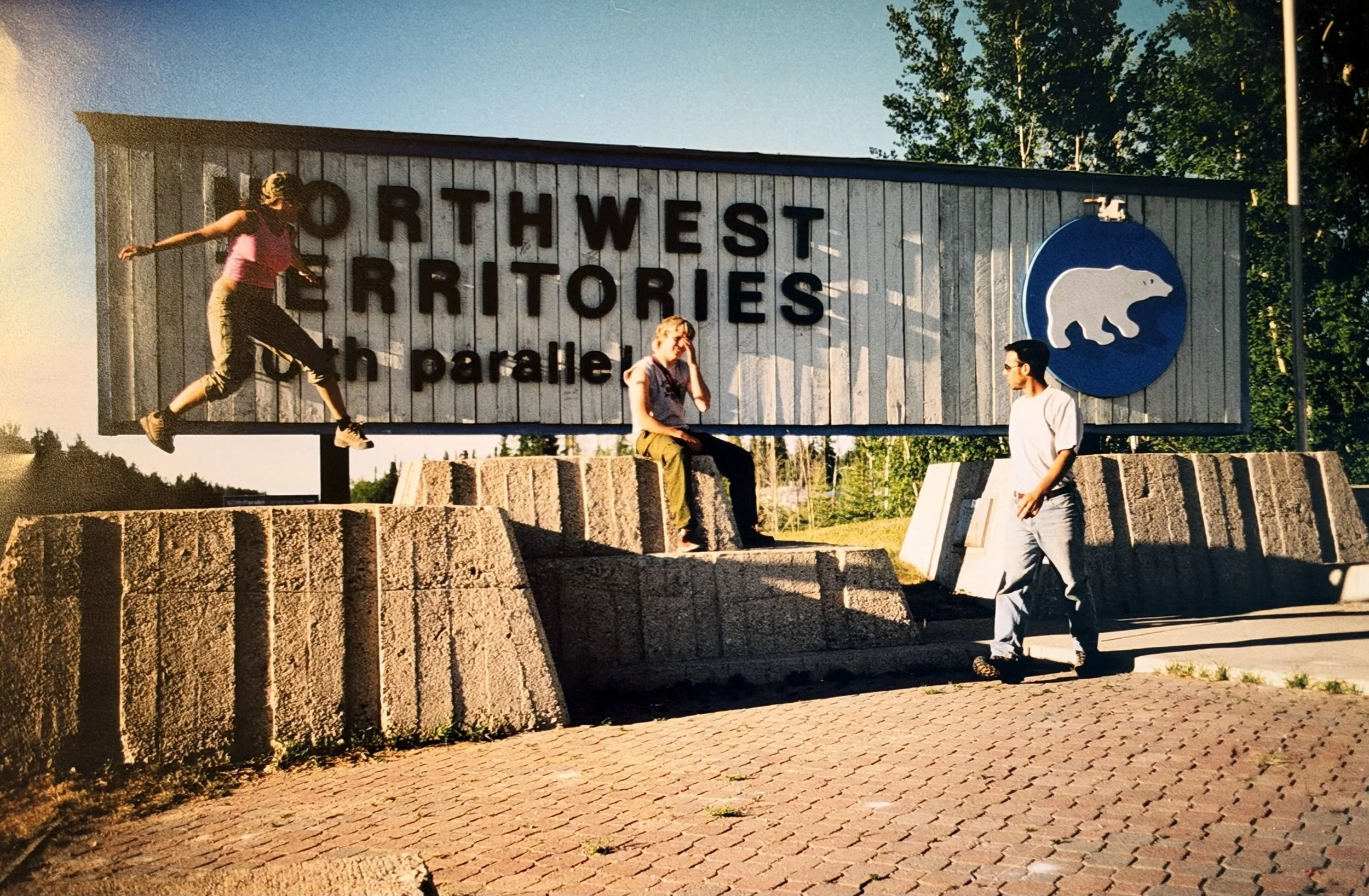
Brittany (Rogers) Telford, Brett Rogers, and Eric Addies, July 2004
When I set my sights on the Mackenzie River in 2004, the plan sounded absurd to most people.
To my mom, it was probably the equivalent of announcing a self-funded expedition to the dark side of the moon. Worse, my sister had agreed to come along, along with her friend and two of my buddies.
We drove the family van thousands of kilometres from southern Ontario to Fort Simpson, Northwest Territories. The plan was to build a raft on the shore of Canada's largest river system, live aboard it for 30 days and float roughly 1,400 kilometres north to Inuvik.
Meanwhile, the family van would travel north on a barge, pass us somewhere along the river and be stored in Inuvik. From there, we'd eventually drive home before returning to university for my senior year.
And remarkably, the overarching plan worked.
But within minutes of arriving in Fort Simpson and seeing the scale of the river, I realized something important.
There was absolutely no way we could build this raft without local help. The scale of the river, the mudflats, the location of the timbers. We needed a truck, real tools and local knowledge.
The success of our expedition would depend on our ability to recognize what we didn't know and learn from people who understood the river. I knew we had to make friends, but I didn't realize how easy that would be or how incredibly well the people would treat us.
The people of Fort Simpson kept our collective dream alive. My guess is they admired our ambition and worried just enough that if they didn't help us, disaster was a likely outcome.
Either way, they stepped up, helping us find materials, feeding us and teaching us things about the river that no book could.
We wouldn't have made it a kilometre without them.
It was also my first meaningful interaction with First Nations people. We were on the traditional territory of the Dene, and on their great river, the Deh Cho.
Before leaving the community, a Dene man in his thirties took our group to the water and taught us about the tobacco offering. It was an offering to the river in gratitude, with a prayer for safe passage.
He told us to make the offering every morning.
"You must bless the river every morning, and the river will protect you."
He said it with incredible confidence. We believed him. And we set off on our journey.
After about 100 kilometres or so, the Deh Cho reaches the Mackenzie Mountains and turns north rather than continuing west toward the Pacific. Alexander Mackenzie had hoped to find a route to China. Instead, his journey took him into the Canadian Arctic.
He called it the River of Disappointment, which, ironically, would eventually become known as the Mackenzie River, bearing his name.
But there was nothing disappointing about it. Its sheer width made it difficult to appreciate the scale of the river. Often two to three kilometres wide, and sometimes as wide as five kilometres around Norman Wells, it seemed endless.
We would float through great stretches of wilderness and then arrive at a roadless community.
Imagine a ragtag crew of southerners arriving in remote First Nations communities aboard a raft that looked like it had been constructed from scraps found at a garbage dump.
Tulita. Fort Good Hope. Tsiigehtchic.
It was my first time setting foot in places like these, and I loved their beauty and rawness.
Kids would run up to us, swimming in the warmer waters left behind along the receding mudflats. Adults were understandably more cautious.
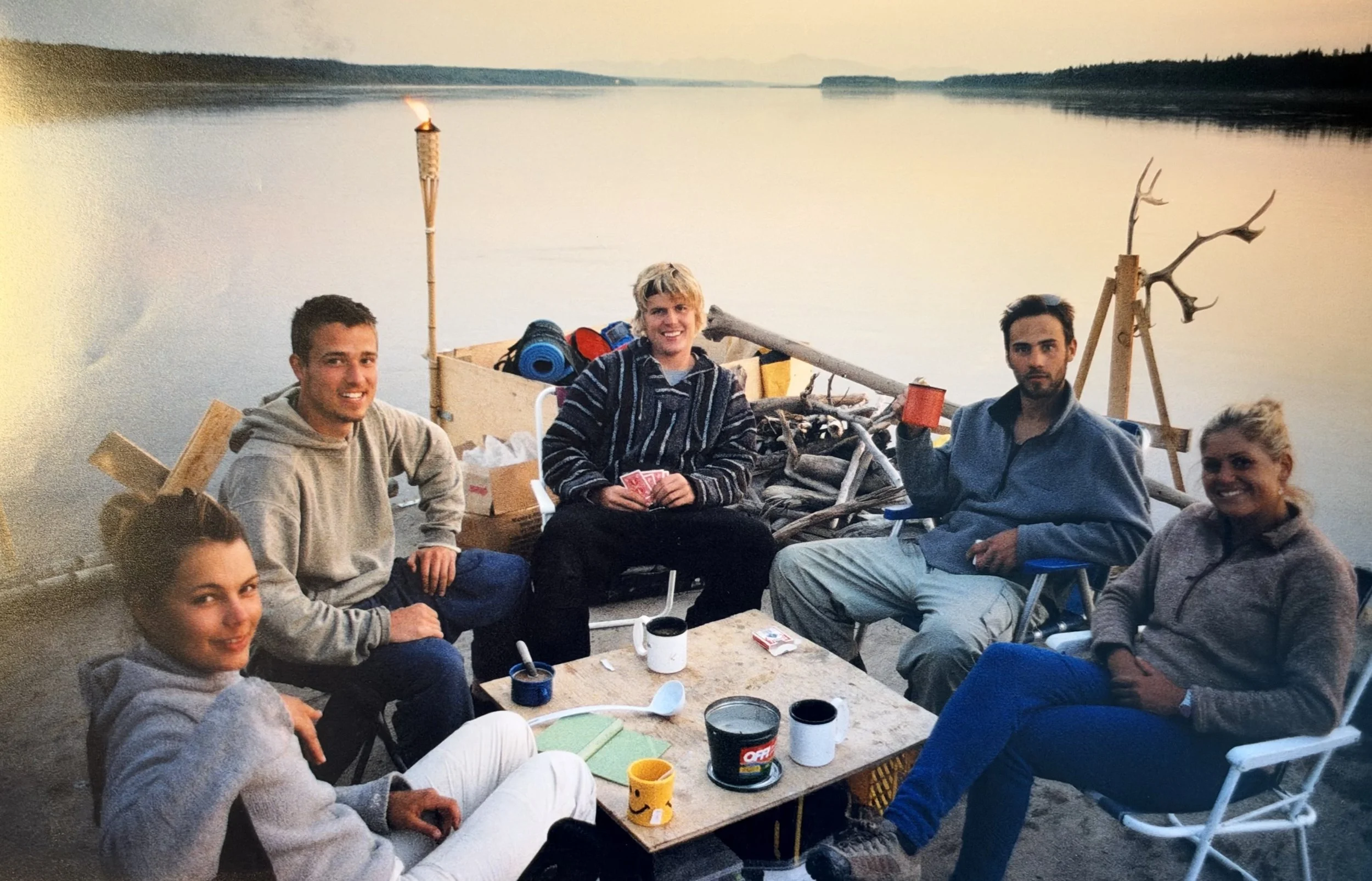
Lauren Pirie, Doug Copping, Brett Rogers, Eric Addies, and Brittany (Rogers) Telford, Mackenzie River, July 2004
Who were we, and what were we doing there?
We'd head to the Northern Store to buy a $5 Snickers, call Mom from a payphone to let her know we were still alive, and give her the name of a town she could look up on a map.
Then it was back to the water.
Things had been going relatively smoothly until we entered the Mackenzie Delta, about 1,200 kilometres into the trip.
With only 200 kilometres to go, we found ourselves navigating a maze of thousands of islands and backchannels, one of the largest intact delta systems left in the world.
That's when the river gave us another lesson.
A fierce storm from the Beaufort Sea hit us. Looking back, it probably wasn't that crazy, but the wind was relentless and there wasn't much we could do about it. We couldn't move, so we found a depression that offered some protection, pitched our tent and hunkered down for 30 hours.
Inside that tent, listening to what sounded like a hurricane, we realized something.
We had forgotten to bless the river with tobacco the morning before.
Lesson learned. The next morning, we blessed the river. The wind died down, and days later, we reached Inuvik.
Coming back to Swim Drink Fish
When the opportunity to apply to lead Swim Drink Fish came up in the early summer of 2026, I didn't immediately know what to think.
The organization had grown into a much larger advocacy group. There was also the possibility that the board was looking for a polished Bay Street leader rather than the grassroots guy I had always been.
I can put on a suit and hang on Bay Street, sure. But I'd rather be on the bay fishing if push came to shove.
It took a couple of weeks of reflection, conversations with trusted friends and the support of my family to see it for what it was: a once-in-a-lifetime, full-circle moment.
Once I put together my application package, I just felt in my heart that this was mine to lose. I was born for this moment.
My two sons also played a bigger role in that decision than they probably realize.
As a kid, I was consumed by fishing. But through university, various careers and raising a family, that passion faded into the background and was almost forgotten.
Believe it or not, we didn't do much fishing on the river expeditions. Our goal was always to keep moving.
Then my two boys came along.
Suddenly, I was spending afternoons on creeks and lakes again, rod in hand, looking for crayfish and untangling fishing line.
What struck me wasn't the fishing itself. It was how much joy they found in simply being by the water, catch or no catch.
One of my greatest responsibilities as a father is to help my children build a lasting connection to the outdoors, including a love and respect for water.
I want them to understand why it's worth protecting, and that can only happen if they have a genuine love for water and the outdoors.
The next expedition
I come to this role with a healthy respect for what's ahead. The unknown has always excited me.
As Mark recently wrote on his Substack, running a charity presents challenges unlike almost anything else. Plus, leaving my previous career meant stepping away from the comfort of the corporate world and into new opportunities for change.
On expeditions, it's often the hardest days we remember most fondly. They teach you more than the easy ones ever could.
On the river, some days we covered 100 kilometres and some days barely one.
But every day mattered. Every kilometre brought us closer.
These are the lessons I will bring to my new role as CEO of Swim Drink Fish.
For me, alongside more storytelling, my focus is on grassroots action and being on the water.
We cannot preach "Connection leads to protection" if we're only doing our work behind computer screens.
As an organization, we need to have a meaningful connection with water. And as CEO, I believe I need to help set the standard for what that kind of engagement looks like.
The great news is that I already have a remarkable team around me and a 25-year-old organization with an incredible history to back it all up.
The legal victories and restoration efforts of our past work have helped transform waterways from Happy Valley-Goose Bay, Labrador, and the Petitcodiac River in Moncton to Great Lakes communities like Kingston, Port Hope, Toronto and Hamilton, and as far west as Vancouver and the Pacific Ocean. These are all places I visited 20 years ago when I was the Canadian Field Coordinator for Waterkeeper.
And then there are the ongoing engagement projects that have grown from this work, including Swim Guide, the Biinaagami Project and the WAVE Prize.
The goal of a swimmable, drinkable, fishable Canada means people across the country feeling connected to their water and inspired to protect it.
Canada is blessed with extraordinary freshwater wealth, yet inequalities remain in who has access to clean water and who gets to enjoy it.
Removing the No Swim, No Drink and No Fish signs is the work ahead.
And none of it happens alone.
Every morning on the Mackenzie, we stopped before pushing off to give thanks to the water.
I intend to lead Swim Drink Fish the same way: showing up each day with gratitude and respect for the water.
And then doing the work.
Thank you to everybody along the way who helped prepare me for this role. I look forward to working together on the challenges and opportunities ahead.